
API 16D BOP Control Hose – 1″ ID x 1 Meter (SS Armored, 5000 PSI, 1″ NPT Male)
In critical well control and drilling safety operations, the performance of blowout preventer lines under extreme pressure and fire hazards cannot be compromised. Shanghai PME Industrial manufactures fully certified API 16D BOP control hose assemblies specifically engineered for hydraulic actuation of BOP units in high-risk environments.
Constructed with a heavy-duty synthetic rubber core, high-tensile wire reinforcement, and a flexible stainless steel armored (SS Armored) outer protective sheath, this 1″ ID x 1 Meter control line operates reliably at a continuous working pressure of 5,000 PSI. Terminated with precision-machined 1″ NPT Male end fittings, each assembly passes stringent hydrostatic proof testing and flame-resistance verification to guarantee uninterrupted hydraulic power delivery when well integrity is on the line.
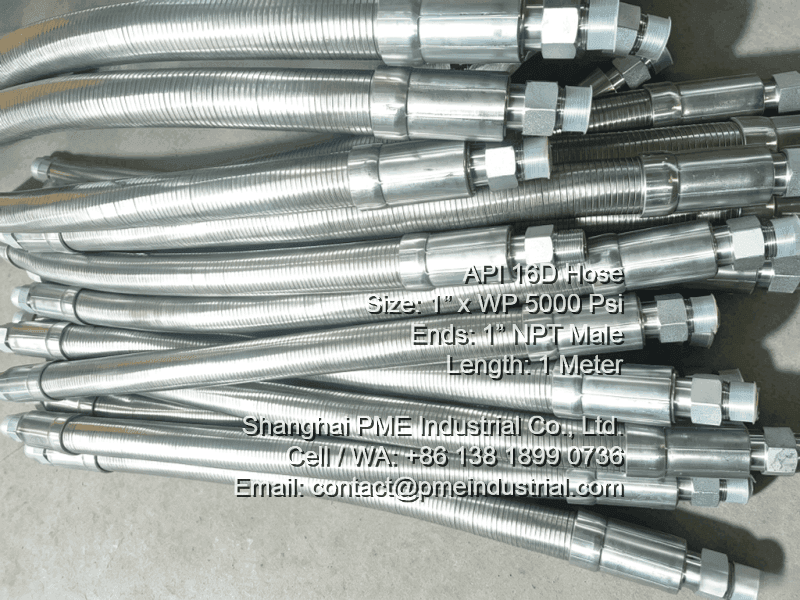
Flexible 316/304 stainless steel outer armor housing high-pressure hydraulic hose terminated with heavy-duty NPT male threads.
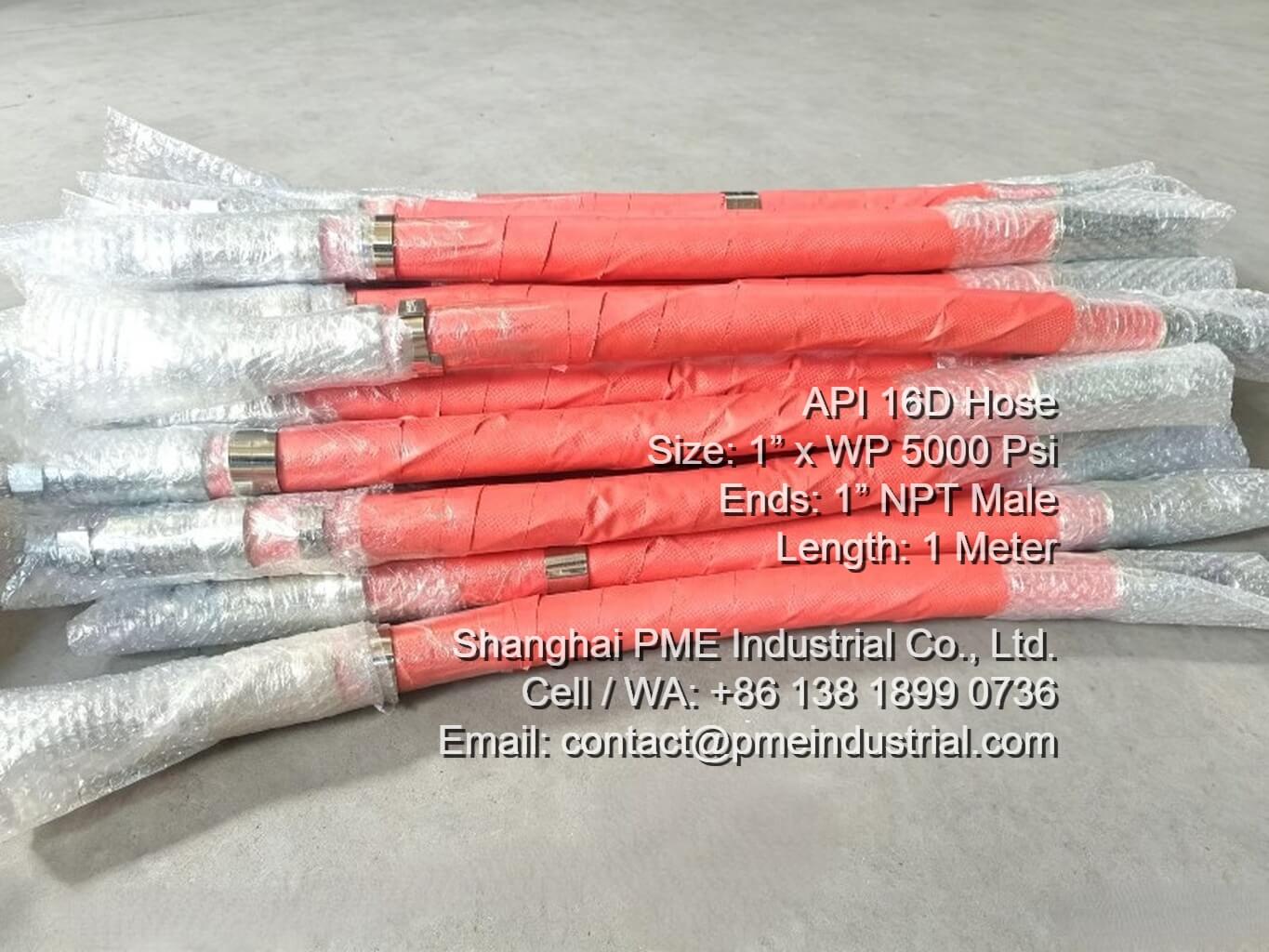
Each 1-meter hose section is individually capped, corrosion-inhibited, and wrapped in heavy poly-film before packing.
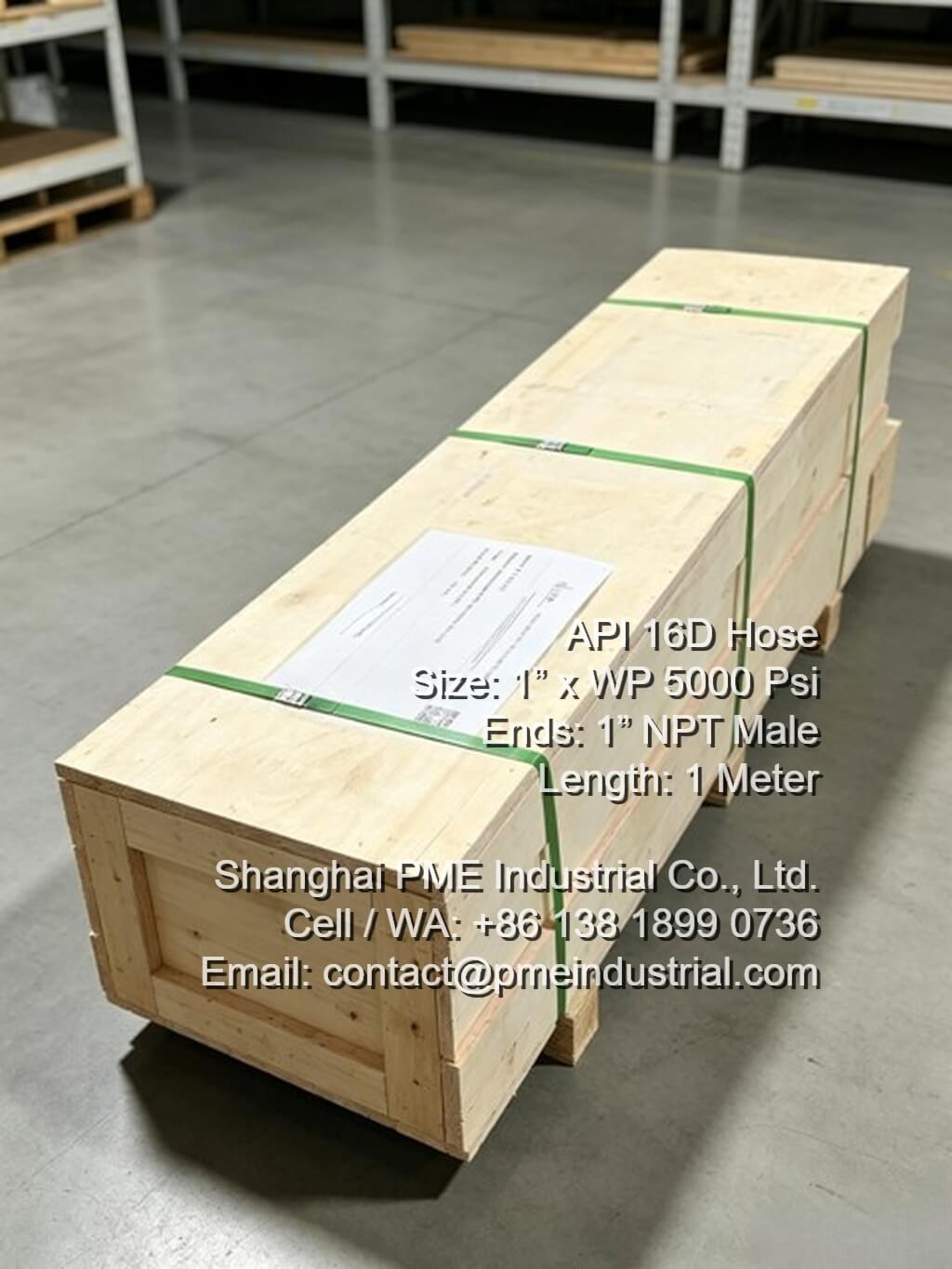
Bundled and reinforced in fumigated wooden crates, fully prepared for ocean and air freight to offshore rig yards.
Technical Specifications & Ordering Parameters
| Standard | Nominal Size (ID) | Working Pressure | Test Pressure | End Connections | Outer Protection | Overall Length |
|---|---|---|---|---|---|---|
| API Spec 16D | 1 Inch (DN25) | 5,000 PSI | 7,500 PSI | 1″ NPT Male (Both Ends) | Stainless Steel Armor (SS) | 1.0 Meter |
In-Depth Engineering Analysis: API 16D BOP Control Line Technology
1. API Spec 16D Standards & Fire Resistance Architecture
An API 16D BOP control hose is designed to perform under catastrophic thermal conditions. Unlike standard industrial hydraulic lines, API 16D certification mandates that the hose assembly maintain working pressure even when exposed to direct open flame (700°C / 1300°F) for a minimum specified duration. This ensures hydraulic accumulators can actuate pipe rams, blind rams, and annular preventers during a wellhead fire emergency. The inner synthetic rubber layer handles high-pressure hydraulic fluids, while high-tensile steel wire spirals absorb pressure spikes up to 5,000 PSI.
2. The Structural Role of Stainless Steel Armoring (SS Armored)
Outer environmental hazards—such as falling tools, abrasion against cellars, intense UV degradation, and caustic chemical washdowns—can quickly compromise unarmored rubber hoses. The continuous stainless steel armored interlocked outer casing provides mechanical crush resistance and prevents hose kinking while maintaining necessary flexibility. Additionally, the stainless steel composition wards off marine atmospheric corrosion in humid offshore salt-spray environments.
3. Malaysia Oilfield Demands & Global Procurement Footprint
In Southeast Asia, offshore drilling activity across offshore Sabah, Sarawak, and the Malay Basin requires stringent compliance with PETRONAS and regional operator safety standards. The 1″ NPT Male, 1-meter SS armored hose is heavily utilized across jack-up rigs, semi-submersibles, and platform drilling units operating in Malaysian waters to connect hydraulic control pods directly to BOP stack manifolds.
Beyond Southeast Asia (Malaysia, Indonesia, Vietnam, Thailand), primary international markets actively procuring 5000 PSI fire-rated BOP control hoses include:
- Middle East (GCC Region): Offshore platforms in UAE, Saudi Arabia, Qatar, and Oman facing high ambient heat and hydrogen sulfide (H2S) exposure.
- North Sea & Europe: UK, Norway, and Netherlands offshore operations requiring strict fire-proof certification and full material traceability.
- Latin America: Deepwater drilling sectors in Brazil, Guyana, and offshore Mexico.
- West Africa: Marine drilling blocks in Nigeria, Angola, and Ghana requiring rugged, abrasion-resistant control lines.
4. Essential Procurement Guidelines for BOP Control Hoses
When selecting and ordering high-pressure BOP control line assemblies, engineering and procurement teams should verify five critical technical parameters:
- Certified Fire Test Compliance: Ensure the manufacturer provides third-party certification (e.g., ABS, DNV, Lloyd’s) verifying compliance with API Spec 16D fire testing standards.
- Pressure Rating Matching: Verify that the working pressure (e.g., 5,000 PSI CWP) and minimum burst pressure ratios align with accumulator manifold system specifications.
- End Fitting Integrity: Check thread quality on 1″ NPT male ends; stainless steel or specially plated carbon steel end fittings prevent thread galling and crevice corrosion.
- Length & Bend Radius Calculations: Confirm overall length (1.0 Meter) accommodates dynamic stack movement without exceeding the minimum bend radius, which could stress end crimps.
- Traceability & Pressure Test Reports: Demand individual pressure test certificates and material test reports (MTR) matching stamped serial numbers on each hose sheath.