
2” Fig. 1502 WxT Integral Target Elbow (15,000 PSI)
In high-pressure oilfield flowback, hydraulic fracturing, and well testing loops, fluid velocity combined with proppant sand creates an aggressive environment for pipe geometry. Standard directional changes are hot spots for wall-thinning failures. Shanghai PME Industrial manufactures premium 2 inch 1502 target elbow components engineered in China to handle high-abrasion slurry transport.
Featuring an integral standard Wing-by-Thread (WxT) connection configuration, this heavy-duty 15000 psi cushion elbow utilizes a specialized fluid-cushion chamber to mitigate abrasive wear. Instead of allowing solids to impact the raw steel boundary directly, our target block assembly forces the slurry to run against itself, drastically extending the replacement lifespan of your high-pressure flowline manifold setup.
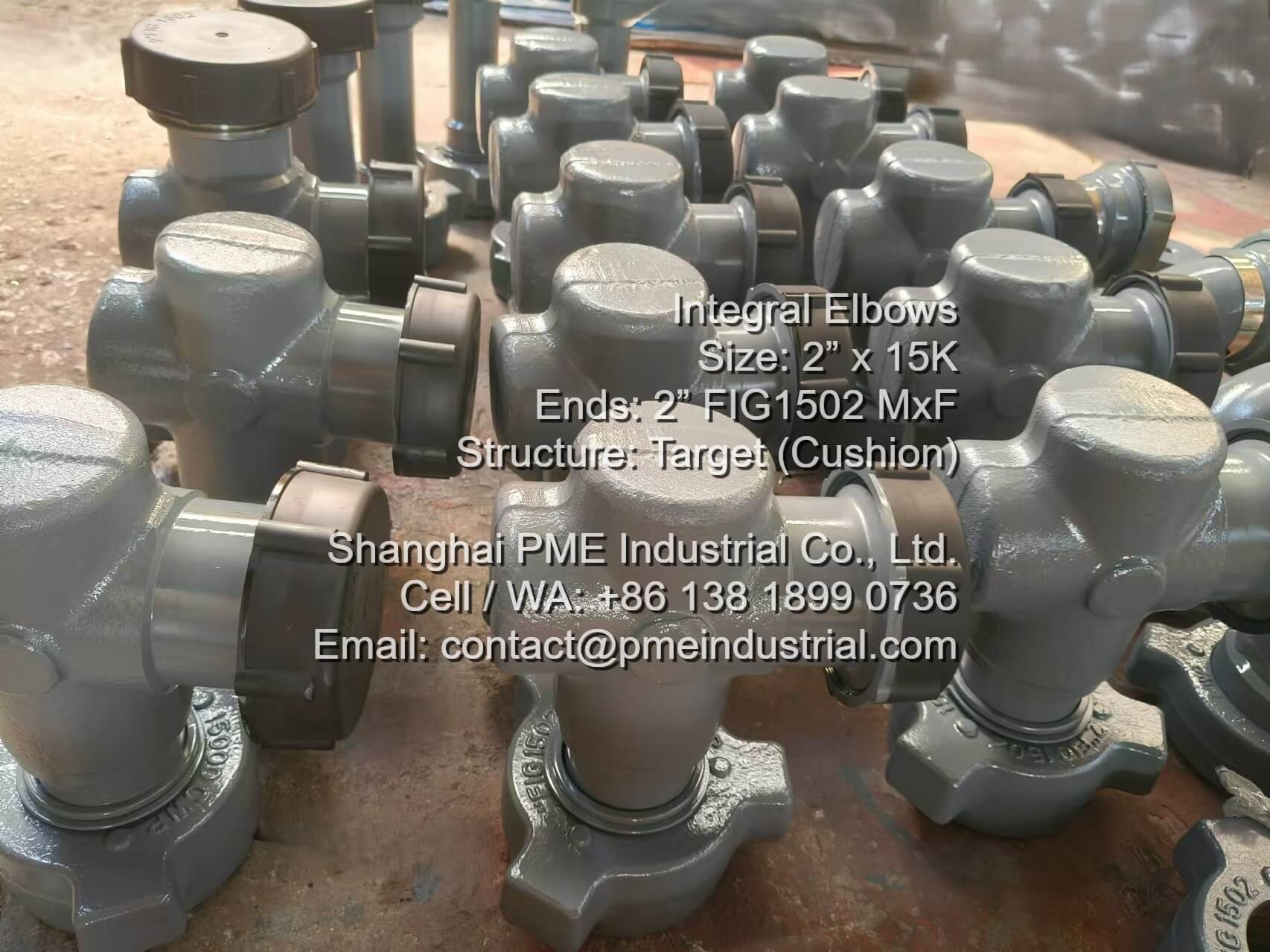
PME 2″ Fig. 1502 Integral Target Elbow
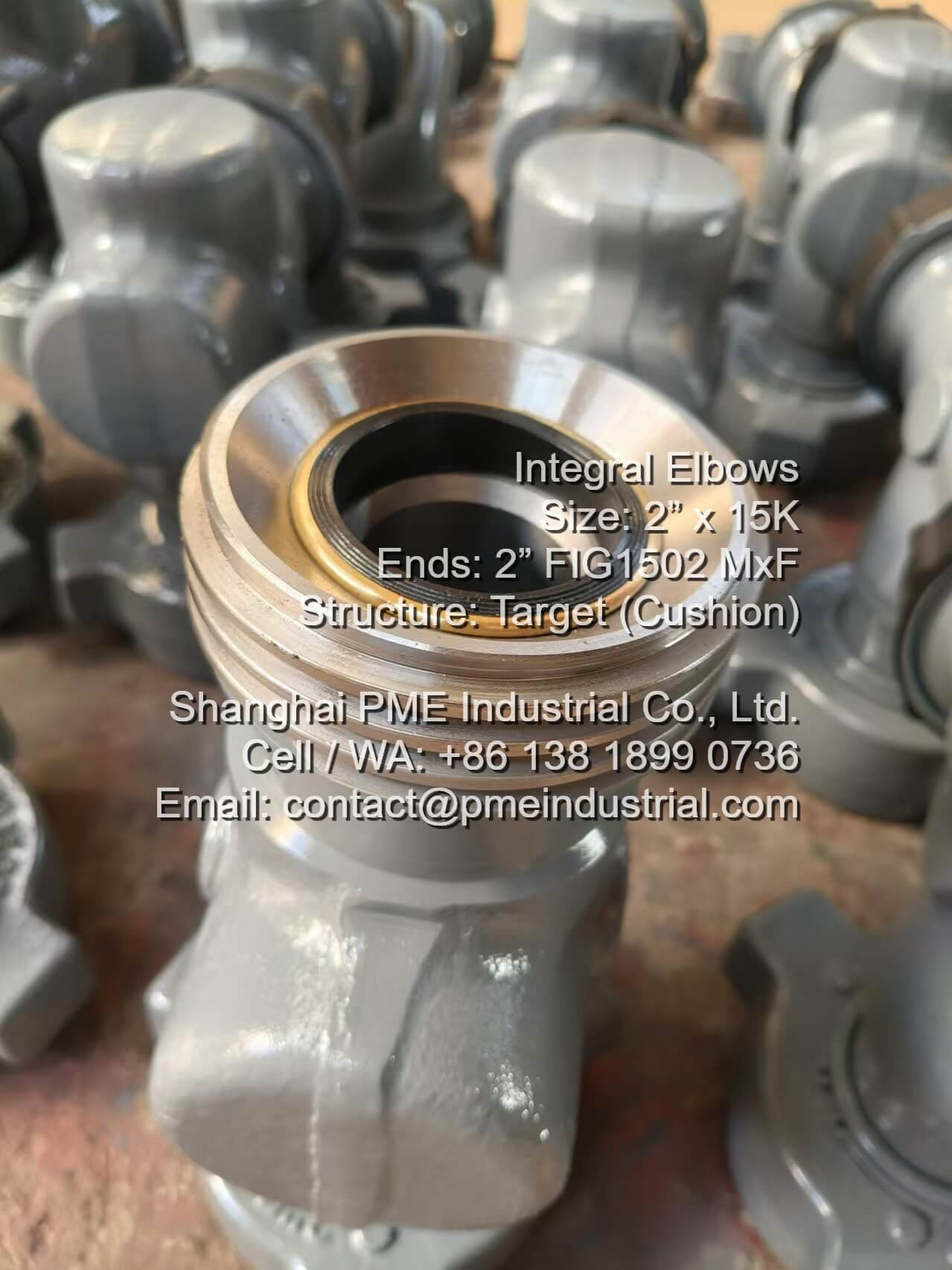
Internal Blind-End Cushion Chamber Detail
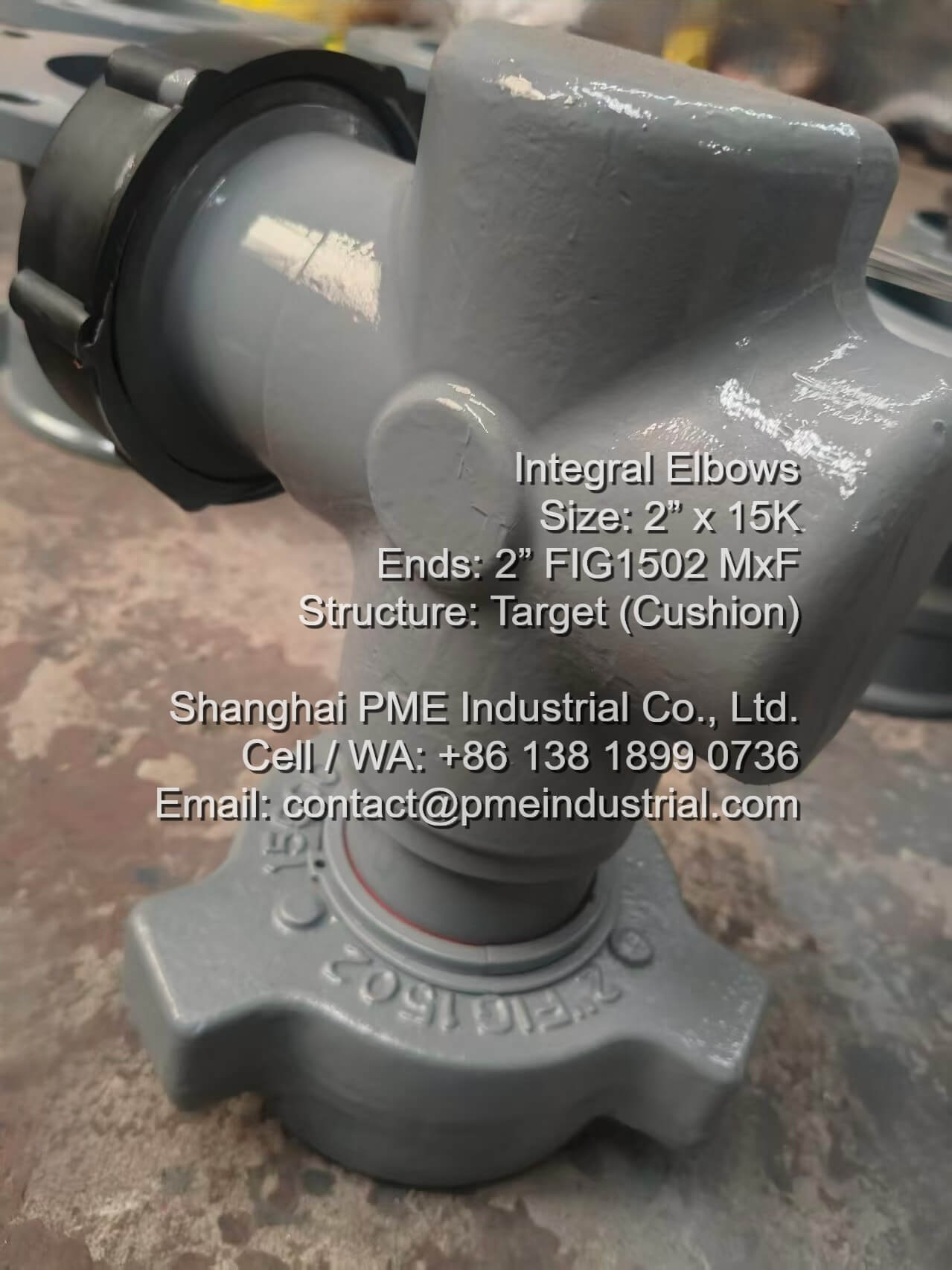
Rigorous 22,500 PSI Hydrostatic Factory Testing
Why Select a Target Elbow vs. Standard Long Sweep 90° Elbow?
When layout teams design standard high-pressure treating iron arrays, choosing between a standard high pressure cushion ell and a traditional long sweep elbow drastically influences continuous operation limits:
Standard Long Sweep 90° Elbow (Traditional Design): While providing smoother initial fluid transition and slightly lower pressure drop traits, the outer radius is directly subjected to continuous particle blasting. In high-velocity fracturing sand loops, wall thinning occurs quickly, leading to unpredictable washing out leaks.
PME Integral Cushion Elbow (Target Design Advantage): Our target elbow utilizes an extended, blind-end chamber block opposite the entry port. As media enters, a stagnant portion of fluid collects in this pocket, forming a natural hydraulic buffer zone. Incoming proppant streams strike this localized fluid cushion rather than the structural steel. This transfers erosive energy back into the flow stream, protecting the core wall from dynamic washout forces.
Product Configuration Data & Specifications
| Component Classification | Nominal Size | End Connections | Pressure Rating | Material Standard & Service |
|---|---|---|---|---|
| Fig 1502 Integral Elbow (Cushion Type) | 2 Inch Standard Bore | Wing Union Nut x Male Thread (WxT) | 15,000 PSI CWP (22,500 PSI Test) | High-Strength Alloy Forging / Standard Service |
| Oilfield Flowline Fittings (Cushion Ell) | 2 Inch Standard Bore | Custom Thread or Union Configurations | 15,000 PSI CWP | Sour Gas (NACE MR0175 / H2S) Optional |
Quality Assurance & Process Compliance
Every single PME high pressure cushion ell block is fully forged from high-cleanliness alloy material lots, undergoing rigorous post-forge heat treatment to balance hard wear surfaces with internal structural tenacity. Wall thickness geometry across the blind buffer zones is structurally reinforced to handle heavy sand density configurations. Prior to final packaging, units are subjected to extensive magnetic particle inspection (MPI) and hydrostatic validation runs to confirm absolute pressure sealing capacity under extreme operational stresses.
Request 15K Flow Component Quotations
Shanghai PME Industrial provides verified quality tracing documentation for all forged high-pressure line elements. For specific sizing parameters, certified material test sheets, or high-density proppant application consultations, reach out to our engineering support group.
Contact a China Oilfield Flowline Fittings Manufacturer
Request Technical Quote